From Voice to Vision: Yaneliz's Year of Leading Change
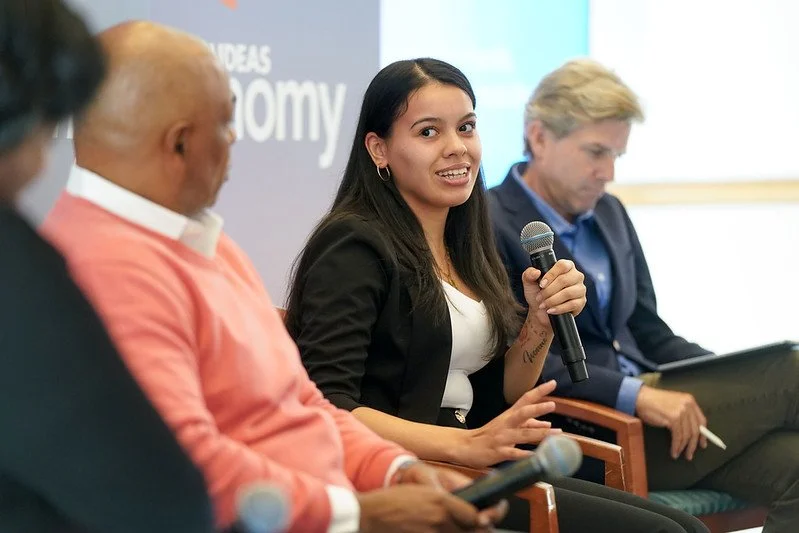
Speaking at the Aspen Ideas: Economy conference
After programs transformed her life, she is leading change for thousands of youth
A small group of young people sits on the committee floor at the New Jersey Statehouse, preparing to share their stories and advocate for themselves and their peers. Among them is LEAD Charter School Class of 2023 graduate Yaneliz Cabrera, about to testify before state legislators about her experience with disconnection.
“I was so nervous, like ready to get up out of there. Jump. Skip. Fly away,” Yaneliz recalls about that first time testifying before state legislators. “I really did not want to go. I almost didn’t show up because I was so scared.”
But she did show up. And when she finished reading her testimony, she realized the power and pride of her leadership.
“There were legislators and very well-respected people just walking up to me and congratulating me and thanking me for sharing my story,” she says. “It was empowering because not every young person gets the opportunity to do what I just did. Me being the voice for them gave me so much pride in myself.”
That moment at the Statehouse was a turning point. A year ago, Yaneliz’s story was about transformation, from struggling student to LEAD graduate to employed young adult building her future. Her story of transformation is about something bigger: leading systemic change for the 100,000+ opportunity youth across New Jersey who face the same barriers she once did.
Finding Her Voice
The shift from being served by programs to shaping them didn’t happen overnight.
Yaneliz’s transformation started with a friend who introduced her to LEAD Charter School, New Jersey’s only disconnection prevention and recovery charter school. An initiative of Newark Opportunity Youth Network, LEAD is designed specifically to serve opportunity youth ages 16-21 who have prematurely left traditional systems.
Her leadership started with something that comes naturally to her: speaking without a filter.
“When I used to tell teachers things at LEAD, they used to actually listen and be like, ‘Oh, thanks for the input,’ it just made me feel very empowered,” Yaneliz explains. “My voice could really be something. When you mean what you say and say what you mean, that’s when people listen to you for real.”
That direct honesty, rooted in lived experience, became her superpower. By July 2024, she was hired as a Sensemaking Fellow for the Newark Youth Voices Initiative, a groundbreaking youth-led research project where young people facilitate conversations with their peers about school disconnection. In June 2025, she was promoted to Project Coordinator for the statewide NJ Youth Voices Initiative, coordinating research across six New Jersey cities. Through this work, Yaneliz has connected with 572 young people, facilitating conversations where they share experiences about why they disconnect from school and what needs to change.
“It’s easy to get young people to come and sit down,” she says. “But the hard part is getting them to actually open up and share their stories. When they do, it’s heartwarming and disappointing at the same time because you hear what they’ve been through and realize there are so many things that could have helped avoid it. But the system isn’t set up that way.”
Those conversations—about feeling invisible in classrooms, struggling with mental health without support, and managing family responsibilities while trying to stay in school—inform everything Yaneliz does. When she speaks at national conferences or meets with legislators, she carries those voices with her.
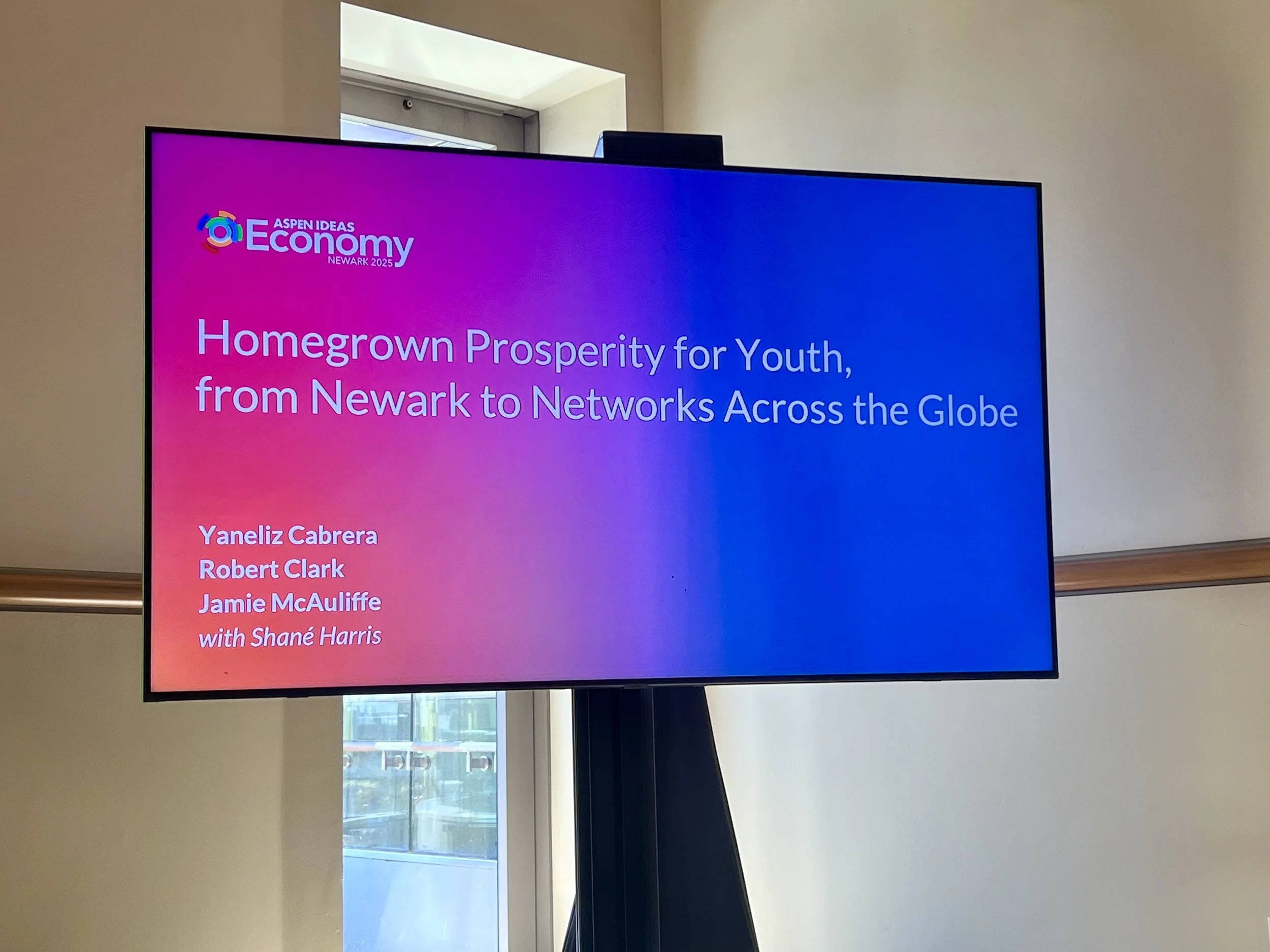
Over the past year, Yaneliz has spoken at three Aspen Institute events, presented research at MIT’s Center for Constructive Communication, and participated in the Citizens + Scholars Summit at UPenn. Most recently, she joined OYN’s Founder and CEO Robert Clark on a panel at the Aspen Ideas: Economy conference held in Newark this past October.
“The arc of change is long. It requires patience and the flexibility and adaptability to learn,” said Mr. Clark. “Yaneliz’s story is a reminder to all of us that there is power in showing up, day in and day out. There is power in place.”
For someone who feared public speaking, her rapid transformation is remarkable. But Yaneliz is clear about why she keeps showing up in these spaces.
“I’m often the only one who has experience with what other young people are experiencing,” she says about many of the conferences she attends. “There are young people out there who didn’t have a mother to tell them to go to school or get a job. I love to be the voice for young people who can’t share their voice.”
At UPenn, she found herself on a panel with other young people discussing educational challenges. While some talked about the pressure to maintain good grades or challenges as foreign exchange students, Yaneliz spoke about something different: being sixteen years old, coming to school, taking care of family, and working to support them while trying to build a better future.
“All their stories sounded the same,” she remembers thinking. “And I’m speaking for the ones who don’t have the opportunity to share their voice. That makes me want to be in those spaces more because my voice is going to stand out.”
Policy as Power
Now serving as a youth leader with the New Jersey Opportunity Youth Coalition (NJOYC), a statewide network advocating for policies that support opportunity youth, Yaneliz works to learn about how to dismantle the barriers she once faced through the stories of her peers.
She’s been part of efforts to pass legislation like the Disconnection Prevention Bill and the NJ YouthBuild Act, policies that create pathways for young people who’ve been pushed out of traditional systems.
“The bills that we fight for, I was once one of those young people,” she says simply. “The Disconnection Prevention Bill resonated with me the most. Why wouldn’t I fight for them if I was once in their spot?”
The work is slow—meetings, follow-ups, waiting for bills to move through committees. But Yaneliz keeps going, fueled by the young people she talks to every week through the NJ Youth Voices Initiative.
“Me being a part of the change, they’re going to actually listen because I was once in their shoes,” she explains. “They need role models that have been through what they’ve been through.”
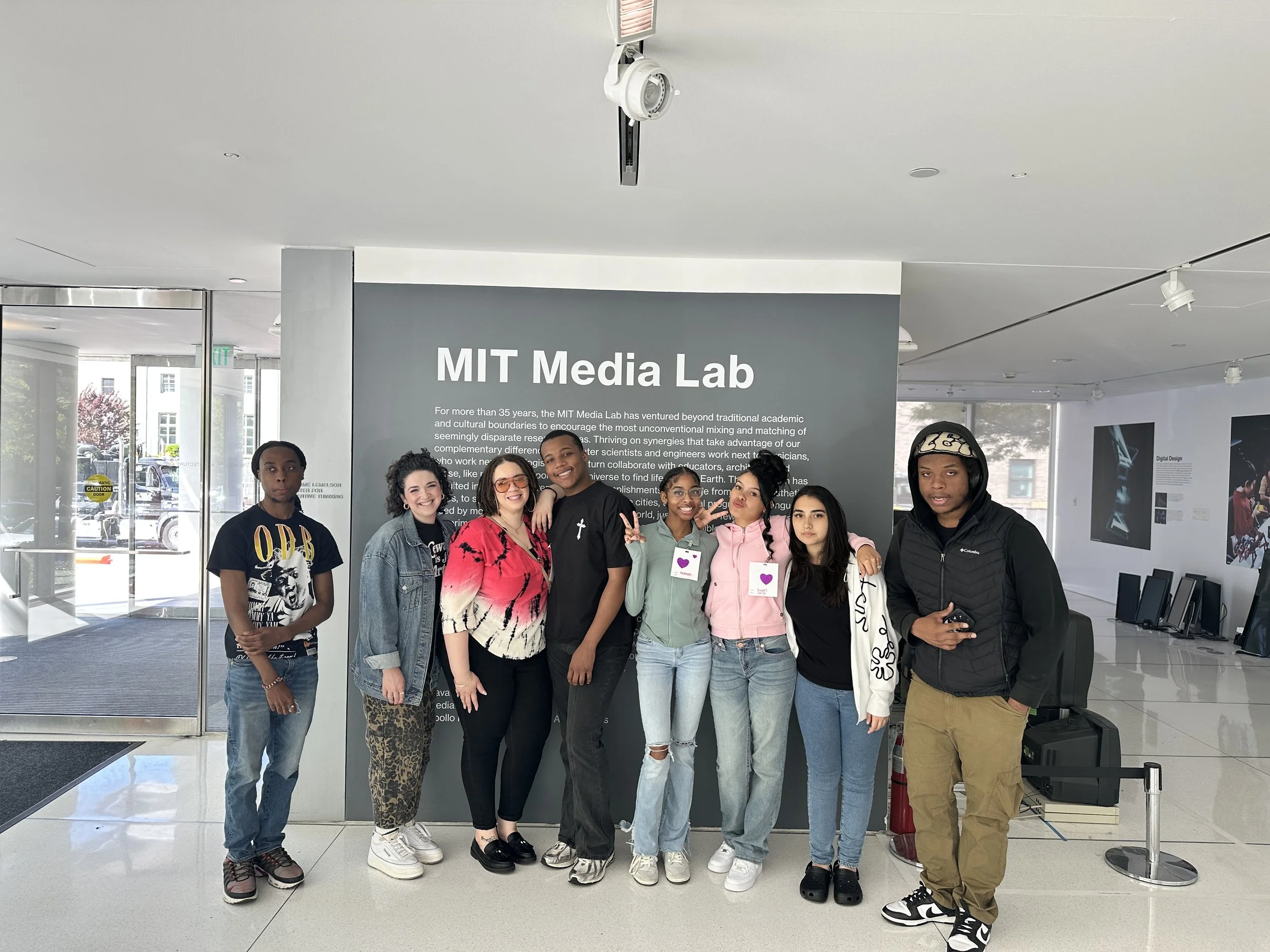
Newark Youth Voices Initiative + MIT
Teaching Others to Lead
Yaneliz now spends her time teaching other young people how to advocate, conduct research, and use their voices to drive change. Her radical honesty informs her approach.
“I'm very straightforward. I don’t sugarcoat anything,” she says. “I don’t hide anything about my past. I don't hide anything about what I do now. Some people need to hear the hard truth about themselves in order to grow in life.”
She wants young people working with NJOYC to know one thing: “We actually care. There are a lot of organizations out here that do stuff just for an image. We do it because we actually care and want to see actual change, not just to make our names look good.”
When asked what’s different about how she shows up now compared to a year ago, Yaneliz doesn't hesitate.
“My comfort level in public speaking. I still get scared, but I used to hate doing it. Now I actually like to share my stories and my inputs. I like using my voice to help other people,” she says. “Back then I used to like to be behind the screen doing it, but now I like it.”
She pauses, then adds with a slight smile: “And I like getting dressed up too.”
Beneath the confidence and the growing list of speaking engagements is something deeper: a belief that systems can change when the people most affected by them are given power to redesign them.
“Not everybody gets the opportunity to advance in life,” Yaneliz tells legislators and stakeholders. “We have to work with young people. Provide more opportunities where young people can actually experience the brighter things in life, rather than what community-based norms are.”
Looking Forward
If Yaneliz could talk to her younger self—the girl struggling before LEAD, before graduation, before any of this became possible—she knows what she’d say.
“Keep pushing. There’s going to be many obstacles in the way. But you just got to keep pushing, because if you don't, nobody's going to feel bad for you. Things are going to make you fall. Things are going to push you back. But you just got to keep pushing and stay strong. And always keep a good heart. When you have a good heart, good things happen.”
Today, Yaneliz is a full-time college student, attends cosmetology school at night, works at OYN coordinating statewide youth voice work, and serves in the military. It's a lot. But she's driven by a simple hope: seeing more young people graduate high school.
“A lot of people I went to elementary school with, started high school with, still haven't graduated,” she says. “We're given the opportunity, given the help. But young people just don't want to take it. I'm trying to knock some sense into some people.”
From that first terrifying testimony at the Statehouse to speaking at national conferences, Yaneliz has spent the past year proving what’s possible when young people are given both a seat at the table and the power to redesign it.
And she's just getting started.
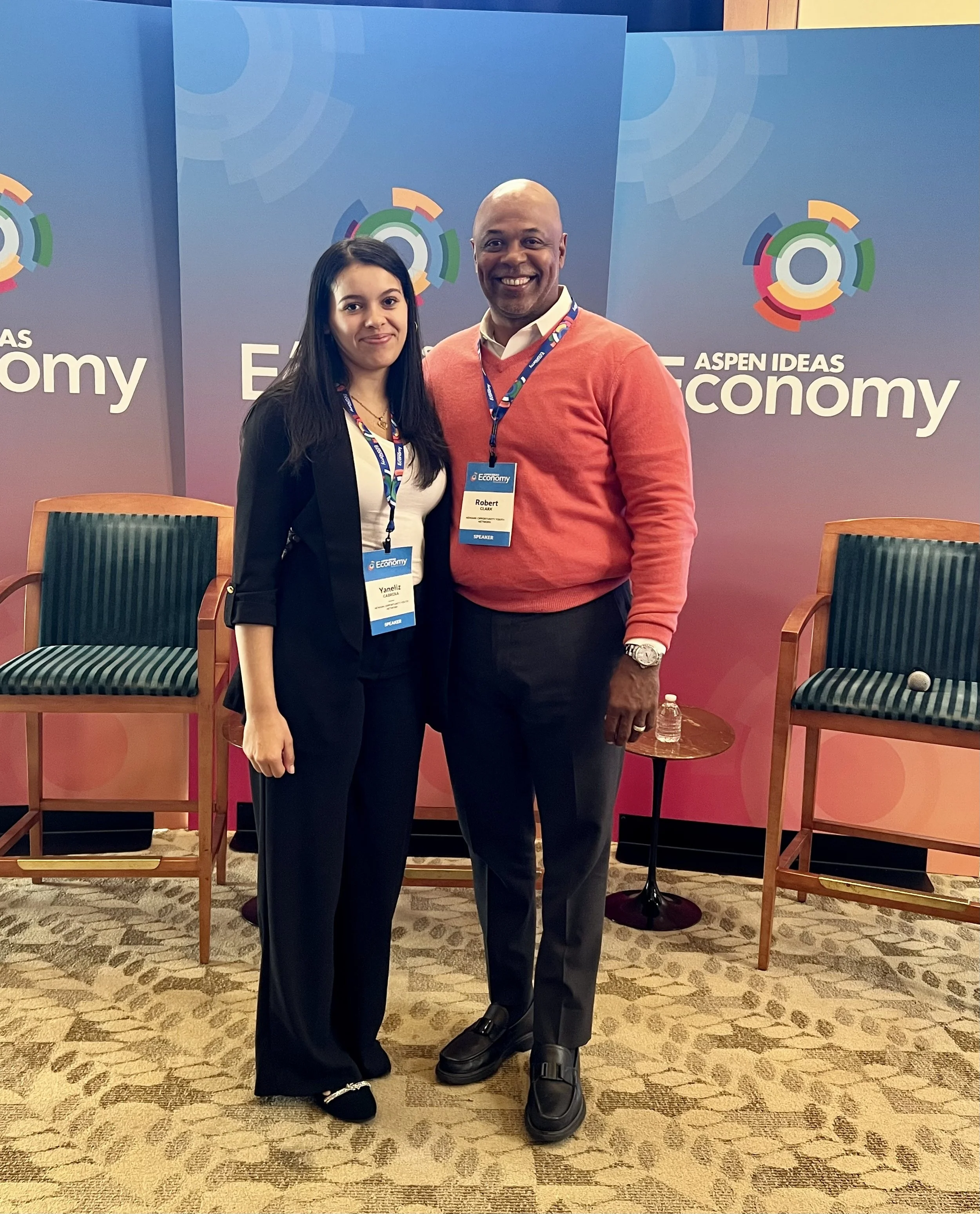
Yaneliz & Robert Clark, NOYN Founder and CEO at the Aspen Ideas: Economy conference
