Breaking Cycles, Building The Village: Shaka’s Story
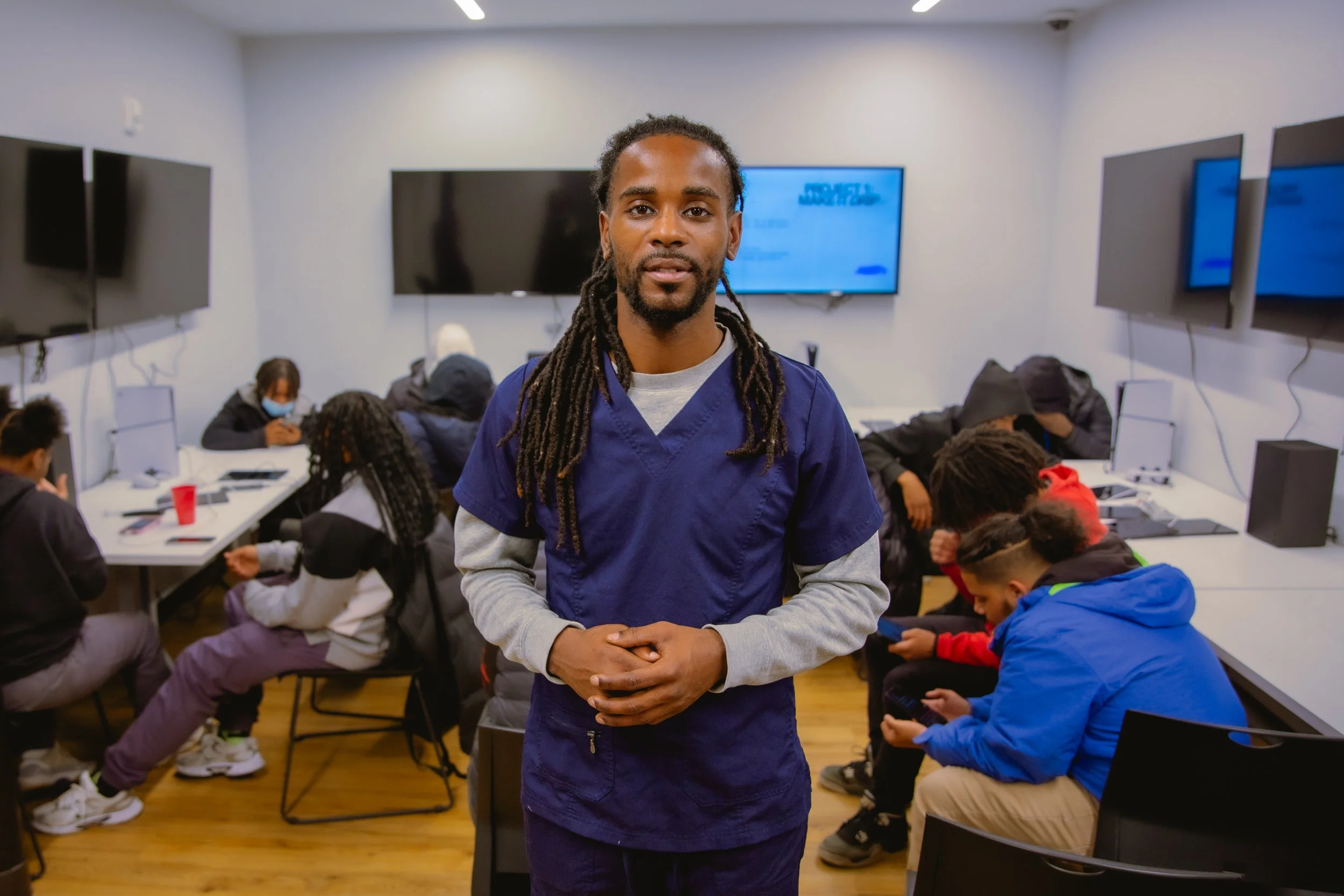
Shaka McKinney leading a workshop at The Village.
YouthBuild 2018 alumnus transforms lives by giving the support he once needed
On a frigid Thursday night, Shaka McKinney gathers a group of young people from his neighborhood, teaching them how to use Canva to create an eye-catching flyer for an upcoming block party–to “make it drip.”
Shaka, who graduated from YouthBuild Newark in 2018, is now the 31-year-old founder of The Village, a nonprofit serving youth ages 14-24 in Newark. Hosted by the Office of Violence Prevention in a renovated former laundromat, The Village started as a neighborhood turkey giveaway and has now become a hub for community well-being. Through the Junior Violence Interpreter Program, Shaka teaches young people conflict resolution, their legal rights, technology skills, and videography. The program serves 14-16 paid participants, with another 14-20 youth who come simply because they want to be there.
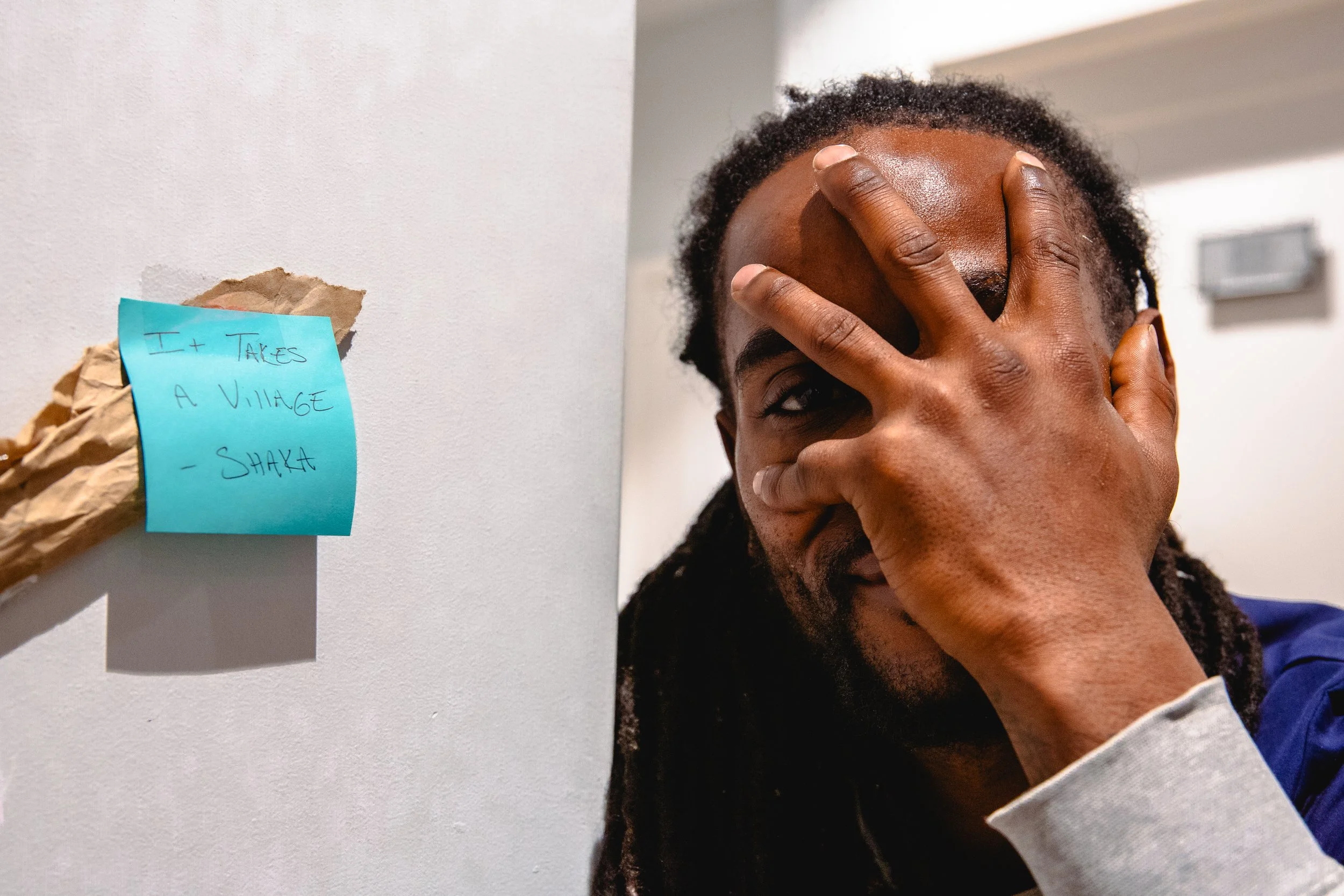
“It takes a village to raise a kid,” Shaka reflects. “But one kid to save a village.”
Shaka’s path to this moment was far from straightforward. At seventeen, he dropped out of school and started selling drugs. A year later, he was shot in a dispute in front of his mother’s house. “I used to think I was going to die,” he recalls. “After I got shot, I didn’t care what happened to me.”
But a mentor of his saw something different—potential waiting to be unlocked. He signed Shaka up for YouthBuild Newark, an initiative of Opportunity Youth Network (OYN) that gives young people who’ve left traditional school a second chance. The program combines education, helping students earn their high school equivalency, with hands-on job training and paid work experience. But even with this opportunity, Shaka would face his toughest battle yet: choosing between two paths. “I was one foot in, one foot out,” Shaka explains. “Going to school but still in the streets.”
The struggle was real and constant. Shaka’s grit kept him moving forward, walking miles every morning from home just to get to class and earn his construction certifications.
But breaking away from the cycles keeping him down wasn’t easy. The night before taking a critical practice test, he was out until 3 a.m., caught up in the life he was trying to leave behind. He fell asleep during the exam, scoring far below his previous performance level.
His teacher refused to accept it. She explained that the practice test was designed to identify exactly where he needed additional support to succeed on the actual exam. Then she showed him his results. Many of the questions he got wrong were ones he had answered correctly multiple times in class. She looked him in the eye and said, “I know you’re better than that. Do it again.” Two weeks later, after proper rest and breakfast, Shaka retook the test and scored above his growth target.
Despite his efforts to redefine himself and turn onto a different road, he faced more setbacks and struggles, including an arrest and a subsequent court case. The support he received at YouthBuild helped him envision a better future and build toward it. When he passed his final diploma exam and was called into the office to hear the news, his teacher cried. “It was one of those moments that made me drop a tear,” Shaka remembers.
“YouthBuild planted a seed,” he says. “That diploma opened doors I wouldn’t be walking through without it.” The doors kept opening.
He earned his OSHA 30 certification and his NCCER credentials in construction. YouthBuild took him on college tours that opened his eyes to a world beyond his neighborhood. He was recently accepted to Cheyney University for the spring semester and is currently pursuing certification as a medical assistant, building toward his vision: a comprehensive community resource hub offering everything from mental health support to basic documents like birth certificates.
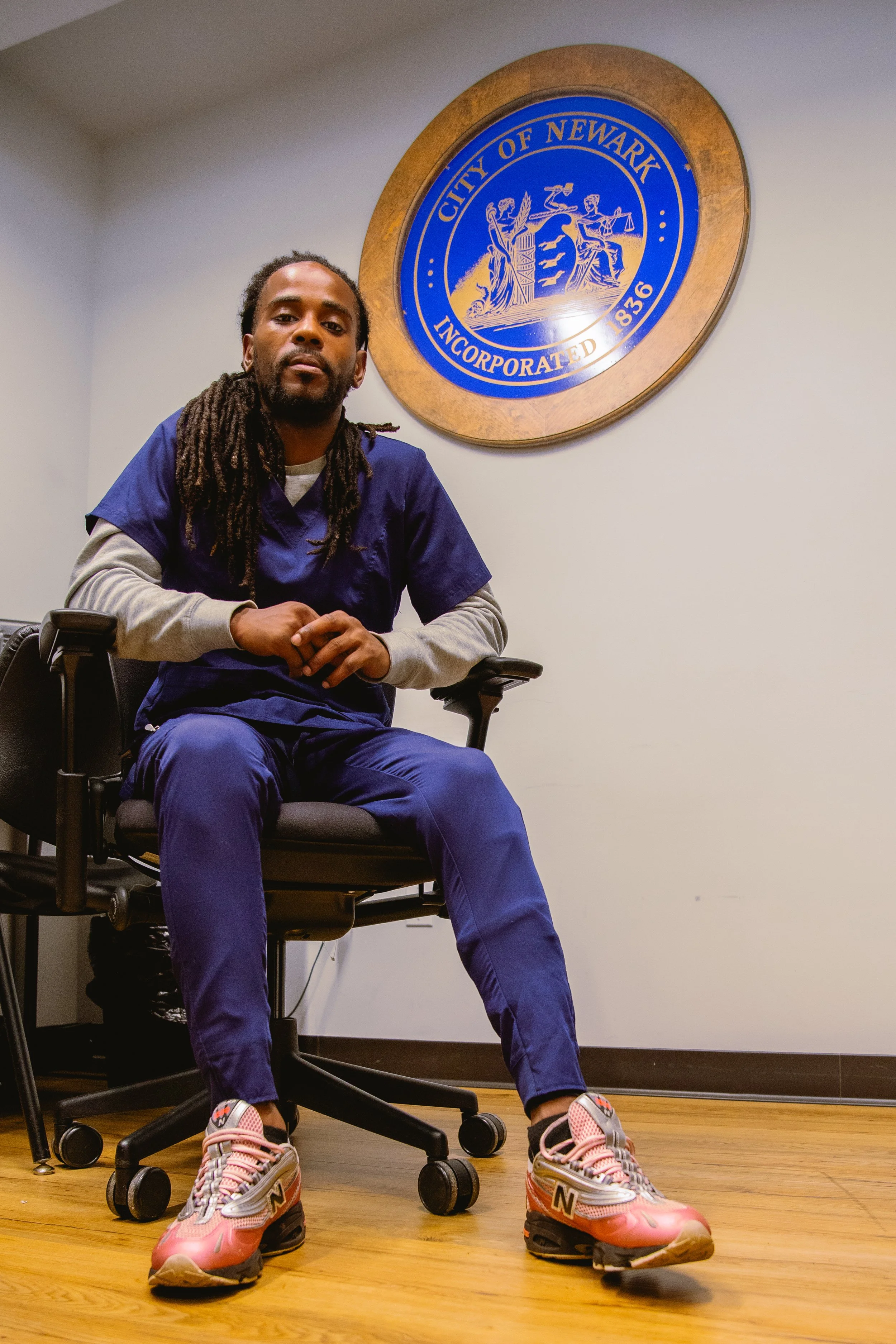
Every week, he and his young mentees host a community food event in his neighborhood. “At first they felt a little embarrassed to do it,” he says. “But, you know, after a while when they started to see me, they wanted to do it– just teaching them how to be men, how to not be afraid to live your life like a village.” He sees addressing mental health in the community as a calling and envisions a center where community members can access a wide range of practical services.
When asked what he’d tell his younger self, Shaka’s answer is simple: “Take the headphones out. It’s gonna be alright.”
His YouthBuild family remains in his life years after graduation. They wrote letters on his behalf during his legal case. They still meet up with alumni, taking them out to eat. They never gave up. “I had a lot of people who didn’t give up on me when I gave up on myself,” Shaka says. “Even when you feel like it’s over, it’s never over. Just keep going. Don’t give up.”
From feeling like he had nothing to live for to giving others reasons to thrive, Shaka’s transformation proves that with the right support, one person can break cycles and build bridges for an entire generation.